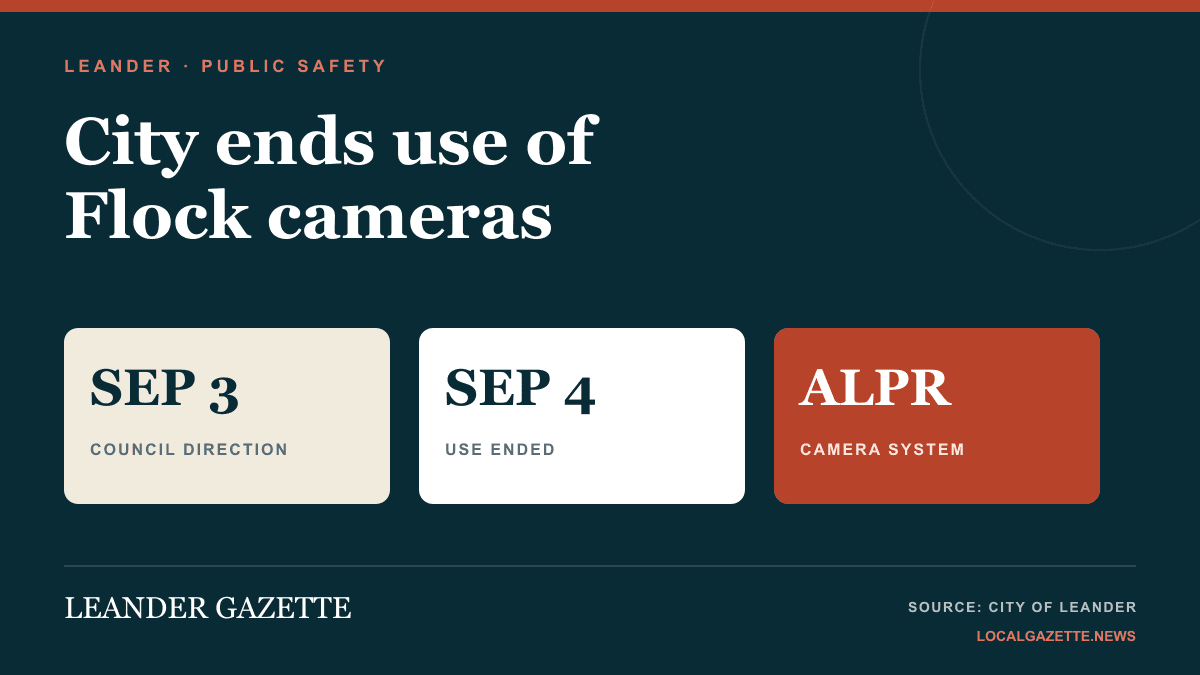
Leander Police Department stopped using Flock cameras and Flock data on September 4 after the City Council directed the city to discontinue funding its contract with the company.
The direction came during the council's September 3 meeting. The city's announcement says the equipment formed part of an automated license plate recognition system, commonly called ALPR, which had been introduced as a public-safety resource.
Flock systems can record license plates and related vehicle information as vehicles pass a camera. The city's short notice does not provide a count of cameras, a contract value or a detailed timetable for removing equipment.
What the decision changes
The clearest immediate change is operational: the police department is no longer using Flock cameras or data. The city also says it will stop funding the contract, rather than describing the move as a temporary suspension.
The council acted in response to community concerns, according to the announcement. It does not summarize those concerns or publish the debate that preceded the direction. Residents looking for individual council comments should consult the September 3 meeting record when minutes and video are available.
The notice also does not explain how previously collected information will be retained, deleted or handled after the service ends. Questions about records, contract closeout or equipment ownership may require a public-information request or a later city update.
Public safety after Flock
City officials say their commitment to public safety remains in place despite losing the system as a resource. The announcement does not identify a replacement technology or a new program.
Ending this contract does not mean all cameras or police databases in Leander have been discontinued. The decision described by the city is specifically about Flock cameras and Flock data, so residents should avoid extending the announcement to unrelated systems.
The city has not asked residents to take any action. Anyone seeking policy documents, council material or contract records should use official city channels rather than relying on social-media summaries.
Questions residents may still have
The city notice settles the immediate question of whether Leander Police is still using the Flock system: it is not. It leaves several follow-up issues unanswered, including the final contract cost, whether the city owes an early-termination payment, who owns installed hardware and how historical data will be handled.
Those questions matter because ending day-to-day access and completing a contract closeout are different administrative steps. Future council agendas, purchasing records or responses to public-information requests may provide additional detail. Until then, residents should distinguish confirmed facts from assumptions about deletion, storage or access by another agency.
People who want to comment on future surveillance policy can follow City Council agendas and use the city's public-comment process. A useful policy discussion can cover purpose, retention periods, access controls, audits, information-sharing and the evidence used to judge whether a system is effective.
How to follow the decision
The September 3 meeting record is the starting point for the council direction. Later agendas may contain contract closeout, equipment disposal or replacement proposals. Search terms such as “Flock,” “ALPR” and “license plate recognition” can help when reviewing city documents.
Residents should also separate police operational information from policy questions. Details that could compromise an active investigation may not be public, while contracts, retention rules and council votes are generally different kinds of records. The Gazette will update this guide if the city publishes material that changes the confirmed position.
The effective date and the city's explanation are available in the official City of Leander Flock contract notice.