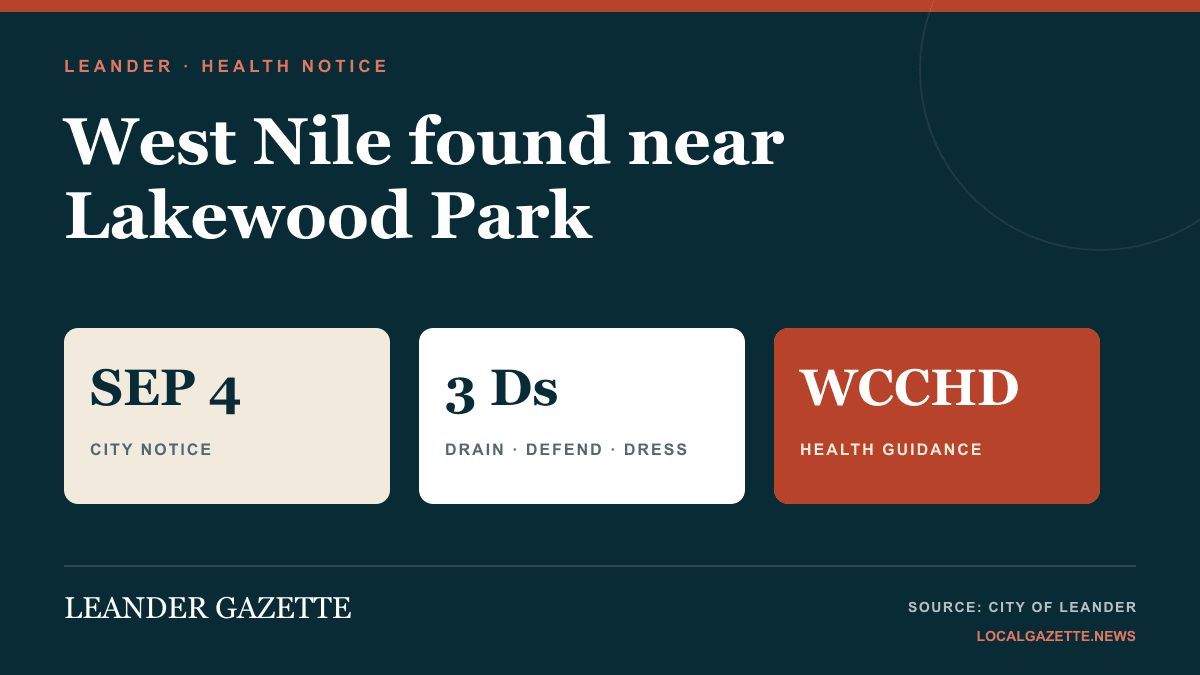
A mosquito sample collected from a trap near Lakewood Park in Leander has tested positive for West Nile virus, the City of Leander announced on September 4.
The result comes from mosquito surveillance and is not a report of a human infection. A positive trap shows that infected mosquitoes were detected in the area sampled, so residents should take routine steps to reduce breeding sites and avoid bites.
The city directs residents to the Williamson County and Cities Health District mosquito-surveillance dashboard for wider monitoring information. Conditions can change after a sample date, and one trap result does not define the risk at every address.
The recommended “3-Ds”
Health officials advise residents to drain standing water from flowerpots, pet dishes, clogged gutters and other containers. Water that cannot be emptied should be managed with an appropriate treatment, following its label.
The second step is to defend against bites by using an insect repellent registered by the US Environmental Protection Agency. Product instructions should be followed, particularly when applying repellent to children.
The third step is to dress in long sleeves and long pants when practical outdoors. Mosquito activity can vary with time, weather and location, so prevention remains useful beyond Lakewood Park.
What the notice means
The announcement does not say Lakewood Park is closed, and it does not advise residents to avoid the area entirely. It provides a location for the positive sample and prevention guidance rather than an instruction to cancel outdoor activity.
People can also check yards after rain or irrigation. Buckets, toys, plant saucers and small containers can hold enough water for mosquitoes to breed. Neighbors and property managers may need to address shared drainage or standing-water problems.
West Nile infections can vary in severity. Anyone concerned about symptoms or their personal medical risk should contact a health professional; an online notice cannot diagnose illness. Urgent symptoms require prompt medical attention.
Residents should use the health district dashboard for surveillance updates and the Texas Department of State Health Services for statewide information.
Reducing mosquito breeding at home
A practical check can start with anything that holds water for several days: plant saucers, children's toys, wheelbarrows, tarps, bird baths, rain barrels and blocked drains. Emptying and scrubbing containers helps remove both water and eggs attached near the water line. Water used by pets should be refreshed regularly.
For pools, ponds or drainage features that cannot simply be emptied, residents should follow local guidance and product labels rather than improvising a chemical treatment. Property owners can also report persistent public standing-water concerns through the appropriate city or health-district route.
Planning outdoor activity
Repellent works best when it is used exactly as directed. Families should check age restrictions and application instructions, avoid applying products to irritated skin and wash treated skin when protection is no longer needed. Loose long clothing and intact window or door screens add another layer of protection.
A surveillance result cannot predict whether an individual will become ill. Many variables affect exposure, including the time spent outdoors and use of bite prevention. It is also possible for surveillance information to change as new traps are tested, which is why the live WCCHD dashboard is more useful than an old screenshot.
When to seek advice
The city announcement is a prevention notice, not individual medical guidance. Anyone who feels unwell and is concerned about a mosquito-borne illness should contact a qualified health professional and mention recent outdoor exposure. Severe or rapidly worsening symptoms require urgent assessment.
Residents do not need to identify a mosquito species themselves before taking precautions. The same basic steps—removing standing water and preventing bites—are useful across the mosquito season and throughout Leander, not only near the positive trap.
The sample location and full prevention wording are in the official City of Leander West Nile notice.